Memories on a trip to Africa
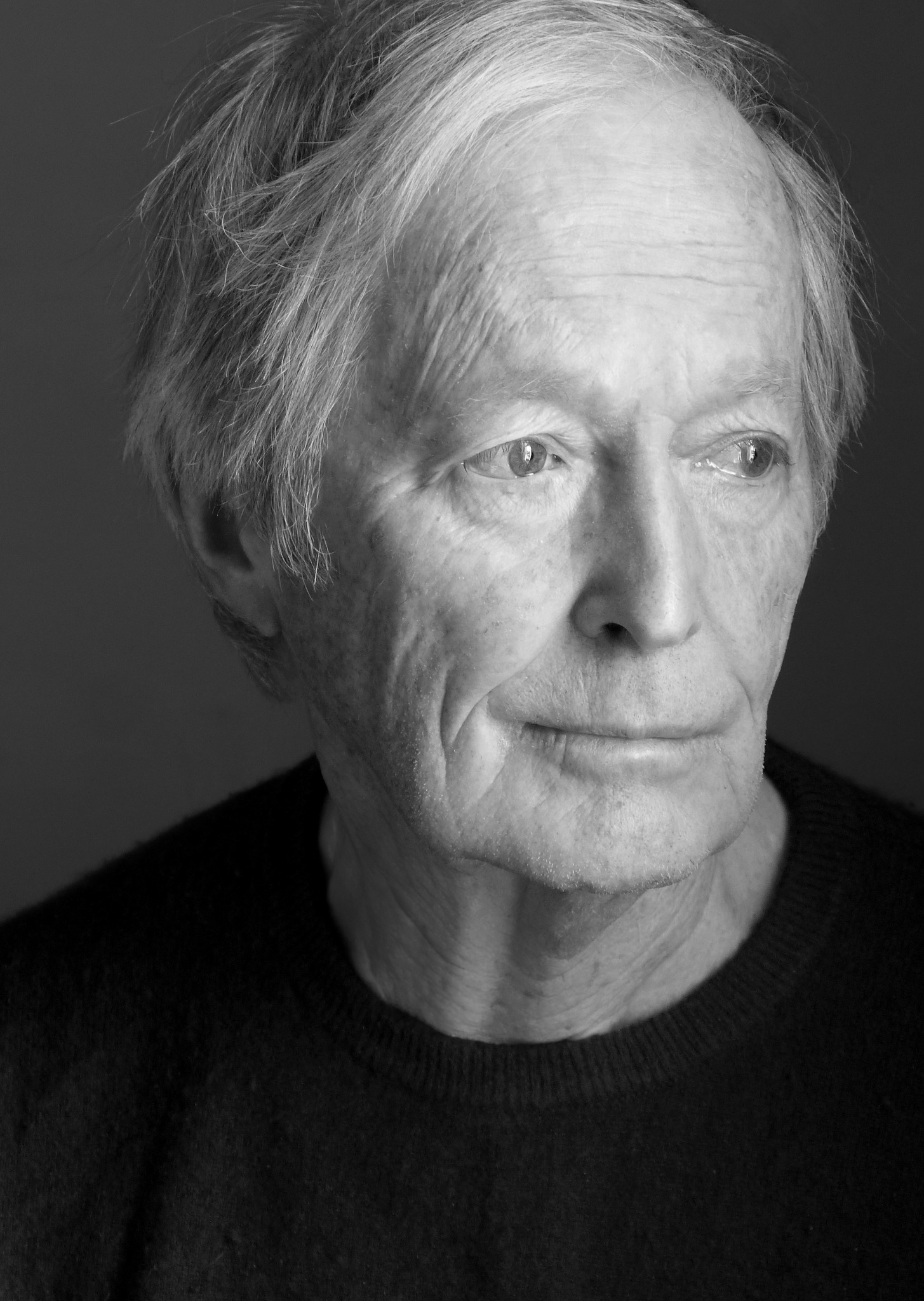

Memories of Africa
recollected in the calm of spring light,
of sun on old gray stones,
the village church still rising
high among the growing trees.
Of happy smiling faces,
released now from centuries of struggle,
everywhere greeting with kindness
an old grey beard returning home
along the curving roads of childhood
lined with leaves. The high fences
wires and gates now fading as Joburg puts on a happy face.
In Capetown's 'District 6'
guards stand at every corner.
Still the poor and homeless
sleep on dusty pavements, pick up stompies*,
but races mingle calmly,
black, brown and white move safely,
life goes on. Tropical trees line old streets.
The old slave market stands forlorn
among towering glass and stone -
reminding us of ancient cruelty,
love, torture and respect for bravery -
but the smiles win out.
The charm and kindness of Africa unleashed,
the warm patience and endurance
winning through at last.
*cigarette buts
The journey so often made - the first time by boat in 1948, two weeks to Cape Town, flying fish on the deck, adults playing quoits or pounding endlessly around the ship. A swimming pool -but we didn't know how to swim! -a ceremony and certificate when we crossed the line. Friendly stewards, the sunlit sea endlessly rushing past, then Cape Town at Christmas time, windy, hot and dusty. We were driven half way up the mountain then got out and walked. It was agonizingly hot. I declared to general amusement (aged 7 nearly eight) " if I'd known how hot it would be I would never have come".
Eventually by train to Johannesburg. A garden with a fig tree I could climb around in and find delicious ripe green figs, never seen before. One day father came home and excitedly told us to look at the new car. We crept into the darkened garage. There was hardly space to move, the immense car completely filled it. We squeezed along the side, it seemed endless - the famous '47 Chevy, a classic model which served us well for many years. We'd never seen anything like it in war weary England.
Another marvel were Rice Krispies. Snap, Crackle and Pop! Unbelievably delicious.
School was grim, but holidays were glorious. Daylong drives on dusty 'dirt' roads. Then the wonders of the 'Game Reserve', teeming with elephants, lions and antelopes . Even better was Qolora (pronounced with a 'Q click' made in the roof of the mouth, followed by a guttural R sound) in Pondoland, a tribal reserve for the Xhosa tribes (starts with an X click made on the side of the palate). This rustic sea resort on the 'Wild Coast', still a most beautiful unspoilt coastline teeming with fish and friendly children so unlike school. The hills around were sadly overgrazed, bare and eroded. The tribal people had no wheeled vehicles, using sledges pulled by immense trains of oxen. I once saw one pulled by 24 oxen in 12 pairs as it turned round in the -very wide! - dusty main street of the local town.
Young girls still went bare breasted with a wonderful posture, carrying immense loads on their heads.
Aged 20 I travelled back to Cambridge on the Comet. a proud British invention, the first commercial jet plane, neatly dressed in a tweed sports jacket, collar and tie. Radicalized by my 3 years at 'Wits' University I was carrying secret documents showing that the South African police were using torture. I was to deliver these to a contact , Jonathan Paton, son of the famous writer and liberal Alan Paton, in London. I would have been in serious trouble if I had been searched. I had friends who were getting deeply involved in the struggle against Apartheid. The political atmosphere was very tense and at home there was trouble between me and my father, now a successful industrialist sending millions of pounds in profits a year back to the parent company in England. His factory, the largest of its type in Africa. was in fact a reasonably happy place providing good jobs to hundreds. The wages were double comparable rates in Brazil.
And now in 2026 and a second Gulf War set off by another U.S. President not understanding the infinitely complex and deeply religious Middle East.
Terminal 5 at Heathrow is a magnificent structure with endless columns and arches, soft colours and no hard edges. Though the food was amazingly delicious I found it terrifying in its immensity after the calm of our rural life. As I got on the plane I said a short prayer and and suddenly the airport seems like a tower of Babel, terrifying in it's lack of seriousness, it's lack of awareness of the seriousness of traveling for 11 hours eight miles high in the stratosphere! It was a calming douche, a reminder of this seriousness of the world, it's passion and suffering .
Landing at Joburg through layer after layer of cloud we arrived in untypical Scottish weather. Johannesburg used to have a perfect climate. Sadly no more - but all the gardens were lush, almost tropical. A suitcase failed to arrive but we were helped by a cheery business-like African woman who promised they'd be couriered to us in at most two days (in the end it took 5!) This friendly business-like if slightly chaotic situation was to be typically South African.
South Africa has a smile on its face for the first time in 70 years. Everyone was friendly and there seemed no sign of racial tension.
A few days later I had a magic moment sitting outside a bakery looking out through the rain at the green, green everywhere. Africa is wonderful when it gets green, it doesn't often happen. Just watching the traffic through the lovely rain outside the bakery where I used to buy the Sunday treats for my parents 30 years ago. One Sunday the week before the place had been raided by a gang of armed men and everybody had had to lie on the ground hand over their watches and their wallets. Fortunately I never had any trouble even in those days when I would be given a hefty pistol to carry on the drive down into the country - where I would sleep with it under my pillow.
Now everywhere there were smiling, well educated, helpful African people really pleased to see one, it was truly wonderful. An old friend said to me ‘it's the first time in 70 years I've felt proud of my country’.
Then we drove back past the bank where once my 90 year old mother caught pneumonia. She'd taken her beloved cook to draw out her savings to send them home for her sister to build a house. This involved them sitting in the crowded bank for an hour or so after which she got very seriously ill and nearly died. She was wonderfully rescued by a swashbuckling Scottish lady physiotherapist who drove around Johannesburg - then very dangerous - in a smart open-topped car. She pummeled mother back to life.
Johannesburg is full of wonderful people. They call it eGoli, the land of gold. It has always had bizazz, the music, the dancing. I love to remember the kwela - children dancing on the streets so wonderfully to a penny whistle. It made the hit parade in England once. Now South Africa smiles while the rest of the world is disturbed.
Taking elderly friends to the ‘Country Club,’ a glorious survival of Edwardian elegance, we found it transformed. Behind us was a huge table of 22 or more very sophisticated (rather loud and pleased with themselves!) Africans looking as if they came from the SABC building nearby. The old club building had more or less completely burnt down but was being thoroughly reborn in a rather wonderful way rather different from the quiet English style of 60 years ago.
The new South Africa is up and running and has huge potential.
Moving down to the mountains where my family has set up a botanical reserve I went swimming up to the waterfall where we used to hide as children. Here a snake once grazed my arm as it sped across the surface attacking a frog - it could have been dangerous but I kept still and it passed. Here mother used to swim side-stroke and father swam every day into his 80s.
As I moved slowly into the cold water a flotilla of water boatmen scattered with immense speed, jumping three feet across the surface, submerging at my advance and then reconstituting their circle as I returned.
Swimming
Amidst the grey green grass,
and lichen covered stones
runs the clear white waters of the stream
tumbling over black rocks into the pool below
beloved dark water
the swim of a lifetime.
A flotilla of water boatmen
on the shining surface of deep black water
swimming through it
my limbs free naked in the cold
clear stream. Then dark water
warmed by the sun
drifting in clouds across the surface.
Wading through memories
that rise in the dusk
and fall in the rain
where the hunter once sat
and drank from the stream
cut out his darts
and painted his prey
Later walking in the grassland aroused memories of a 4 hour scramble on my own through the forest and then swimming 30 lengths of the pool. Another favourite memory is of early morning walks seeing a multitude of brightly coloured little birds, and on one amazing occasion (once in 60 years) a pair of trumpeter hornbills. Their mournful call used to resound through the forest – sadly not any more. They are a spectacularBird with a huge double bill apparently wearing formal evening attire. The female is walled up in the nest to raise the chicks!
Then lunch with an artist friend and neighbor (only one hour's drive away! People there think nothing of driving a long way to see friends) at Old Joe's Kaia. This is a favorite haunt in a subtropical 'kloof' (means rocky valley). A treasure of a hotel and restaurant. Its name means Old Joe's Hut in Zulu. Old Joe is now a purely mythical figure and the name is symbolic of an affectionate relationship between white and black African culture surviving through all the troubled past, difficult for foreigners to understand perhaps! It has round thatched 'rondavels' as sleeping quarters and a wide colonial style hotel building surrounded by palms, creepers and exotic trees. Our friend lives in a place known as Mamba Valley famous for its deadly snakes. Recently sitting on her 'stoep' (verandah) she saw a black head emerge from under the seat. It was a mwesi, a Mozambique spitting cobra. She called the local snake catcher but he couldnt find it. Then it reappeared but she said resignedly to herself "I'm not afraid of it" and carried on as normal!
These snakes can blind you with spitting poison in your eye and this story brought back memories of a terrifying moment as a child when I had to run past one of these spitting cobras on a mountain path on a very steep hillside. I had got separated from my father who was the other side of the snake which had raised up its sinister head just a few feet from the path. Just run he shouted at me!!
Later that day on an evening walk Trish nearly trod on a thin wiggly snake as it shot off the path into the grass. It is of course dangerous to tread on snakes as this is one of the commonest ways of getting bitten. Early next morning she met a duiker, a lovely little delicate antelope, walking around the house as she went to the laundry room. Its name means diver in Dutch as it dives off into the undergrowth when you come near it, and it is very rare to see it so tame. A few years ago she saw a bright green snake in a bush near there. This tree snake, which hunts birds, is dangerous if it does bite but it rarely does being back – fanged which makes it difficult to bite a human.
Moving down to Cape Town and staying in 'District 6' brought back painful memories of the horrors of apartheid. This area had been the home of 'Cape Coloured' (mixed race) people for 300 years, but was brutally cleared and its inhabitants moved miles out of town in 1968 by the Apartheid regime. The culture of the area had been Afrikaans and Christian – a wholly disgraceful episode which caused huge opposition at the time from
all races.
Their right to vote had been removed by packing the Senate and their rights generally curtailed based on a spurious racial classification inspired by the Nazi ideas held by leading members of the government.
The area which is in the heart of Capetown, is only a 10 minute walk from the National Gallery, the Cathedral, the Groote Kerk and the parliament buildings, and is now a subject for regeneration. We were staying in an idealistic hotel built of hempcrete aimed at digital nomads!
We walked to the National Gallery most of which was absurdly devoted to an exhibition of a weirdly queer artist dressing himself up in tights while the vestibule was crammed with a hodgepodge from the collection . This included one or two superb 19th century British paintings surrounded by a confusing jumble!
Sadly this visit was dominated by a figure asleep on the pavement entirely covered up except for a worn cracked dusty barefoot showing signs of life. A terrible impression of poverty and abandonment as if his (one assumed it was a man) soul had left his body. Another time we saw a very lean and hungry man reach down to the gutter to pick up an abandoned fag end.
Later we visited the magnificent Anglican cathedral where Archbishop Tutu had reigned for 10 crucial years (1986 to 96) during the ending of apartheid and the transition to democracy in which he played a very important role in enabling this to be a peaceful transition - which it might very well not have been. Sadly this walk was dominated by a hideously deformed beggar accosting me as I was crossing the road through heavy traffic, struggling to find the cathedral which was poorly signposted. I felt guilty that I didn't give him anything. I was just too preoccupied the vicious wind and grit in in the air.
Sadly District 6 is now dotted with hideous skyscrapers dating perhaps from the apartheid years.The huge old police building in red brick with pilasters, columns and neo-classically decorated caused one to tremble to think of what went on there in the apartheid times. Facing this in an old church is a very moving museum dedicated to the history of the area. This is now a leading attraction for tourists. Pathetic photos of people being ejected from the homes where they or their ancestors had lived for 300 years.
In Johannesburg the brutal treatment of the Bantu under apartheid was terrible, but the removal of people, literally the Afriakaner’s cousins, their only language being Afrikaans, on the basis of a spurious racial classification was somehow more cruel.
All this reminded me forcibly of my own radicalization at University in 1960 as laws were being passed removing the right of a non European person (including mixed race under this term) to attend my university, this to be restricted to ‘blankes’ (whites) including people of mixed race who looked white enough.
It was all so horribly stupid. And reading government pamphlets about ‘Christian national education’ which involved restricting non Europeans to primary education on the grounds that they would only be manual labourers turned me from a complacent middle class student to a convinced left winger at odds with the rest of my family. Afteer I went to Europe to continue my studies I deserted South Africa which was sad. Others who stayed were sometimes more saintly. Indeed in the end white South Africa voted for democracy, something which it is often not given credit for. Apartheid was always based on a lie. Races had always lived side by side and there had always been a degree of affection and understanding between them – apart from the hard liners of course. Anyway that’s all over now, miraculously.
-AR


Comments