Memories on a trip to Ireland
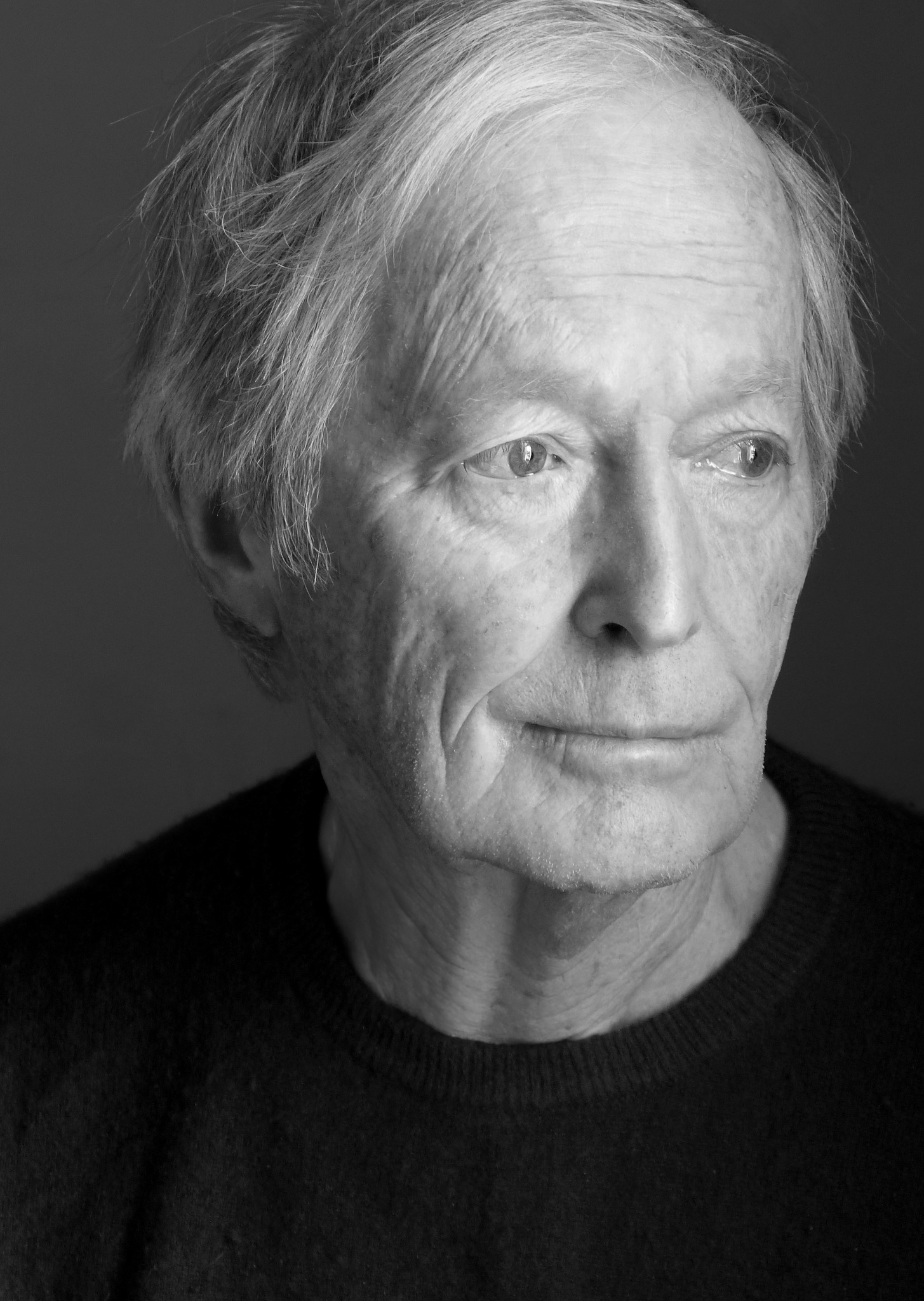
On a recent trip to Northern Ireland to see my nephew and his family, I found myself reflecting on the memories stirred by the long drive north.
My wife and I travelled via southern Scotland, taking the ferry from Stranraer so that we would pass through the country where my much-loved Scottish grandfather had grown up.
Driving up the M5 past my childhood home in the Midlands, the spire of Tewkesbury Abbey came into view and with it memories of my mother, who loved it deeply.
Our relationship was intense and, at times, tragic. She had Greta Garbo looks and a brilliant mind. Though top of her class and longing to become a history teacher, she was taken out of school at fifteen by her father, who believed educating women was dangerous and tried to marry her off. Later she excelled at university in Johannesburg, coming top of a hundred-strong history class, yet could not graduate because she lacked a school-leaving certificate.
As we drove up the M6, which now cuts through the farm where she and I were born, I could still see her riding bareback across the fields. I treasure a photograph of the River Penk where she and her brother swam against parental orders, risking the waterweed.
After we emigrated to South Africa in 1949, we were both unhappy in the colonial atmosphere of the 1950s. My father worked relentlessly building a factory. My relationship with my mother was all I had. In later life I sometimes felt she placed too much emotional weight on me.
At my Anglican boarding school, designed by Herbert Baker and run by austere High Anglican monks, I was clever, young and friendless. The Latin Mass with its bells and incense seemed magical. I was already struggling with my sexuality, ashamed of fantasies I told no one about until I saw a psychoanalyst at Cambridge. To my surprise she was unperturbed. During that period I did my best work.
The M62 brought back the 1990s and an ancient off-grid cottage high on Haworth Moor. Winters were fierce. We walked to Sylvia Plath’s grave in Heptonstall and across to Todmorden, a place of darker reputation. My second marriage ended there. One night, in a drunken rage, I nearly struck my wife’s lover with a candlestick when he burst into our cottage. By chance it was not where I expected it to be. I pushed him out instead. It was a moment that could have altered everything.
Through the Lake District I remembered a Cambridge love affair sixty years ago. I had fallen for a beautiful South African girl whom I directed in a one-act Gogol play. We were both betraying partners left behind in a country where political opposition could be fatal.
La passion m’a égaré le regardJ’ai pris accoutumance de tes ennemis (Psalm 7, translated by Paul Claudel)
As teenagers in the 1950s we had been passionately anti-apartheid when few white South Africans were. When I left for Cambridge I carried documents proving police torture and passed them on to Jonathan Paton, son of Alan Paton. It was a time of love, fear and betrayal.
Though uncertain of my own worth, I proved attractive to women and to men, and in my early twenties repeatedly plunged into intense affairs that overwhelmed me.
Turning into Dumfries and Galloway brought thoughts of my paternal grandfather, the sixth child of a tenant farmer. Small, gentle and fiercely intelligent, he lost his father at fourteen and was sent south to work in a small chemical factory. He eventually prospered, living in Birmingham with a great oak in his garden. Fiercely anti-Jacobite, he once stopped me singing “Bonnie Prince Charlie”: “Ye’ll no be singing that in this house.” He neither smoked nor drank and would sit sharpening pencils at the oak desk at which I now write. His quiet voice still seems to rebuke my early excesses.
We stayed near Kirkcudbright, once an artists’ colony known as the Scottish St Ives. Under a hard frost we walked through its cobbled streets to the harbour. It felt beautiful and faintly haunted.
The Irish crossing was cold but calm. Thirty years ago Protestant and Catholic areas had been visibly marked; now the border is almost invisible. Peace has rendered it ordinary.
We drove past the Giant’s Causeway, sister to Fingal’s Cave on Staffa which inspired Mendelssohn, and down into South Armagh, once notorious during the Troubles that thankfully ended in 1998.
Passing Dungannon recalled my first marriage, to an Indian girl from Zanzibar who had studied at Belfast University, and my intense years of research at Cambridge.
After studying physics in Johannesburg under Frank Nabarro, I went up to Cambridge intending nuclear physics but was disappointed by the teaching. Paul Dirac, a great scientist but reluctant lecturer, raced through his material. I turned instead to pure mathematics, which seemed beautiful and coherent compared to the chaos of quantum theory. Ironically, mathematics close to what I worked on later helped bring order to that chaos.
Each morning I would cycle to my psychoanalyst’s house on Grantchester Meadows, speak uncensored for fifty-five minutes, then cycle on to the maths department to prove a new theorem on the blackboard. My colleague once exclaimed, “It’s different every day!” In the coffee room John Conway would hold court, spinning vast mathematical structures he called “monsters and moonshine.” When he died of Covid in 2020, I wrote a poem for him.
Eventually we reached the Ring of Gullion to stay with my nephew and his Irish wife. Crossing the border repeatedly, one barely notices it now.
In a pub, signs for Jameson’s reminded me of an eccentric Irish peer who drank it neat from a wine glass and claimed foxes bayed at the moon when the head of his family died. In Cambridge I had moved in anti-apartheid circles; one acquaintance proudly declared she was the daughter of the Duke of Leinster and took precedence over a bishop.
So many remarkable people, long gone now. So many ghosts in a single week’s journey north.


Comments