A Day of Rest
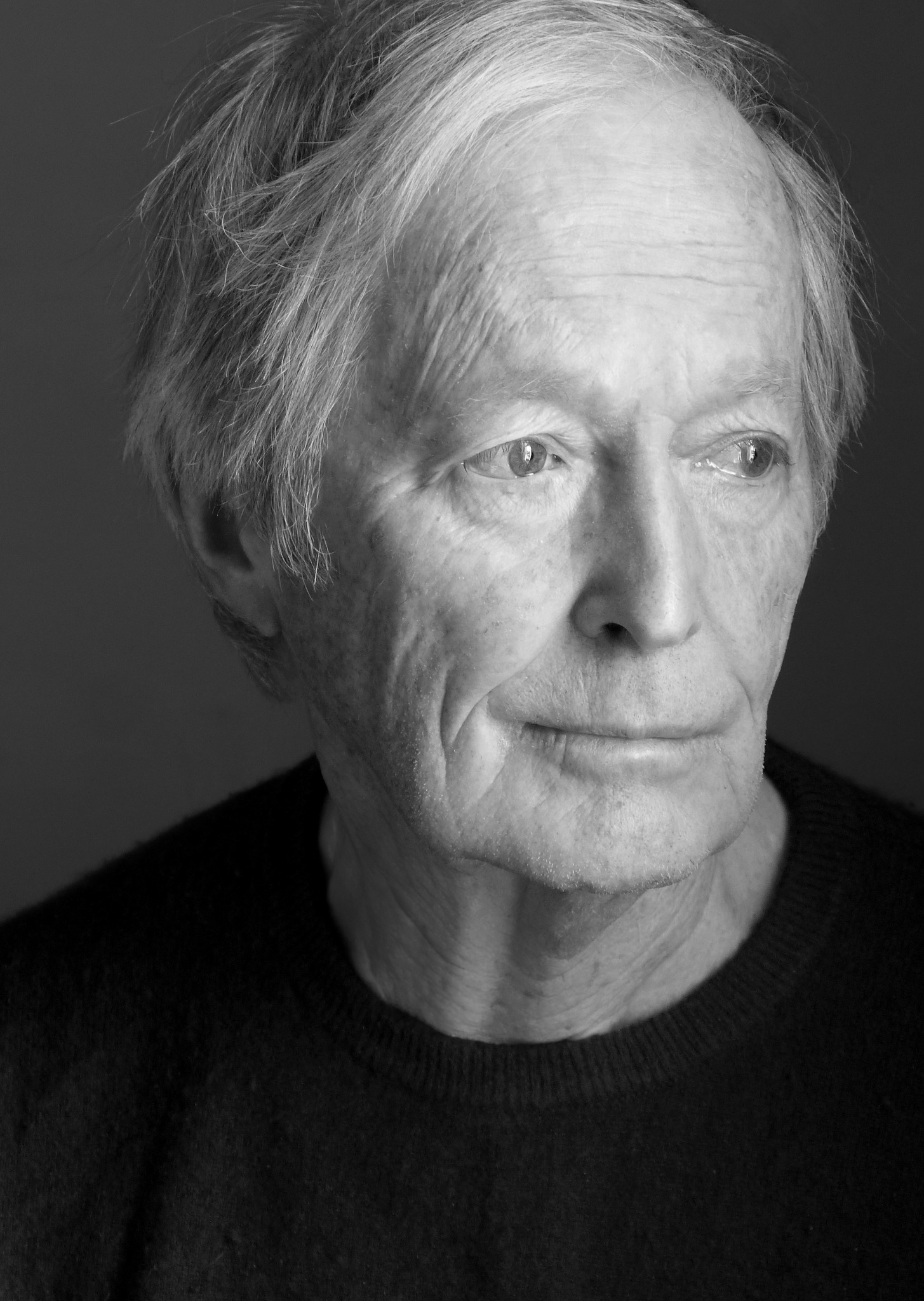
Today I said to myself that I would rest completely, do absolutely nothing.
It reminded me of the great actor (always known simply as Ian) whom I once met in his dressing room at the National Theatre, taken there by a mutual friend. We reached it through a strange, ugly concrete labyrinth which echoed, as he remarked rather waspishly, with "the cries of failed actors."
"After the run," he said, "I shall go to South Africa, by the sea, and do absolutely nothing for three months."
Sadly, I can only afford one day, as I have a mountain of mundane jobs waiting for me.
For a start, I have to prepare for next Tuesday's PCC (Parochial Church Council) meeting. As secretary, and following the unexpected resignation of the acting churchwarden, I am now expected to do rather more. As ours is a thousand-year-old Grade I listed church, there is certainly no shortage of work.
First, I have to finish the minutes of the last meeting. I recorded them and then, with misplaced optimism, pressed the transcript button, which faithfully produced fifteen pages of wonderfully garbled text.
Then there is the poetry reading next Friday at Coates Village Hall, near Cirencester, from ten until twelve. As a one-time actor (my second career, begun in my fifties), I have longed for opportunities to read my poems aloud. Now that they have started to come, with two further readings already arranged, I am becoming rather aware of my eighty-five years.
Fortunately, ninety minutes of Tai Chi today restored both mind and body after a busy few days.
Perhaps, in the end, doing nothing is never really doing nothing at all. It is noticing. A rose beginning to open, an old memory returning, a prayer recalled while working quietly in the garden. A few years ago, tying back one of my roses, I found myself thinking of George Herbert and wrote this.
George Herbert's Rose
As I look down the endless years,
remember now forgotten tears,
feel them now at peace,
healed by plants so strong;
as I pull nettles from the ground
,enjoy my summer flowers,
tie back a rose,
its first gentle budding,
a cutting taken long ago
from George Herbert's church,
a loving pilgrimage;
recalled now by this opening bud,
this whorl of petals,
pink as the dawnthat opens in my hearttoday.
Wilcot, September 2021
Recently two old university friends came to see us, both now in their eighties. One, a greying falcon with a background in intelligence; the other, an aged eagle with unreliable legs. Both remain fiercely intelligent and deeply interested in my work.
I promised to send them a radio play I wrote about the tragic death of Alan Turing, hounded to his death, or was he murdered, by the security services?
He was working with one of the world's first computers, largely designed by himself, carrying out calculations relating to atomic energy. He was also a convicted homosexual who, several years earlier, had been sentenced to chemical castration. I once spoke to someone who had known him at King's College, Cambridge, who recalled Turing cheerfully remarking over dinner that, as a result of the treatment, he had grown breasts.
The security services, particularly the Americans, were deeply paranoid at that time about homosexuals as potential security risks. It was the era of Burgess and Maclean. Alan's death, under the strangest of circumstances, poisoned, with a half-eaten apple beside his bed, has inevitably led to speculation that it may not have been suicide.
If that were true, it would rank as one of the greatest own goals in British history: a disgraceful way to treat a war hero whose work in breaking the Enigma code undoubtedly saved countless lives.
Then we had another visitor, also South African like myself and a lifelong opponent of apartheid. He had been at university with me in Johannesburg during the 1950s before we both went to Cambridge.
I mentioned the excellent recent Channel 4 documentary about Nelson Mandela.
"Oh," he said quite casually, "I once met him."
While working as a journalist to help pay his way through Cambridge, he had been sent to interview Mandela, only to discover that Mandela had just been arrested. Astonishingly, when my friend presented his press card at the dreaded Johannesburg Fort, where Mandela was being held, he was allowed in.
He found Mandela immensely charismatic, an outstanding leader, utterly calm and clear-headed, with thoughts so perfectly ordered that they seemed arranged in a filing cabinet.
Sadly, the interview could never be published because Mandela had by then been "banned", meaning that neither he nor his words could legally appear in print.
When I left South Africa for Cambridge shortly before this, I was carrying secret documents showing that the police were already torturing prisoners, probably in that same grim fortress. The Fort dominated the hill above the university, ugly, squat and menacing. Like Rome, Johannesburg is built upon a series of hills.
Those were terrible days.
The greatness of Mandela lay not simply in surviving them, but in emerging without bitterness. Today he is rightly honoured by people of every race as the father of the nation. That South Africa became a democracy without descending into civil war owes more to him than perhaps to anyone else.
The documentary showed the moment when, after twenty-seven years in prison, he addressed an immense crowd for the first time. His face simply glowed. It was one of history's great triumphs.
Whenever I think of South Africa, I find that memory and longing are inseparable. Years ago, waiting to leave once again, I tried to express those feelings in this poem.


Like my other present hero, Dietrich Bonhoeffer, Mandela even earned the respect of one of his prison warders, who features prominently in the documentary.
The fact that Mandela was never executed reminds us that, however dreadful apartheid was, it never descended to the absolute evil of Nazism. A close family friend, a Dutchman who survived the war hidden in a tiny space beneath the roof of a house in Amsterdam, venturing out only on starless nights lest someone should betray him, used to say that people who compared apartheid with Nazism simply had no idea what they were talking about.
Bonhoeffer himself was profoundly influenced by the vitality of the African-American churches he encountered during his time in Harlem in the 1930s. He contrasted their living faith with what he regarded as the lofty but sterile German Church of the period.
His most famous words remain unforgettable:
"When Christ calls a man, he bids him come and die."
Earlier this week I was trying to explain Auden's extraordinary poem Friday's Child, dedicated to Bonhoeffer, to our small church poetry group, which meets once a month.
One member recommended a YouTube lecture by Rowan Williams on Bonhoeffer's theology. I listened carefully, only to find myself more confused than enlightened.
Our eldest member, a distinguished retired scientist, observed with characteristic dryness that Rowan Williams was probably the last person one should consult for help explaining anything, since his own writings were themselves so magnificently opaque.
I suspect he had a point.
Perhaps, after all the meetings, transcripts, church business, history and argument, what finally remains are the places that quietly shape us. As we grow older, we realise that we belong to them as much as they belong to us.
That thought brought to mind another poem.
Place
I am become one of those
who take their identity from the land;
from the downs rising,
woodland crested around the vale
whose fertile soil and streams,
rushy places and wide meadows;
whose muddy lanes,
lined with brambles,
cursed with nettles,
crossed by deer and feisty badger,
fill our terriers with delight;
where birds are everywhere,
moles thrust between ancient stones;
the high-walled manor,
the crenellated church tower;
grey stones, rampant ivy,
and all the quiet things
which, almost unnoticed,
become home.
And now, perhaps, I really shall spend the rest of the day doing absolutely nothing.


Comments